What could go wrong?

Thursday, January 13, 2011

The Venetian Affiar - Part 1

Traveling to one of the most iconic cities in the world is something you can't really prepare for. While other cities may have unique traits, no city is as more recognizable than Venice.

Formed from numerous lagoon islands, Venice is one of the most visited cities in the world. Traveling there for the weekend would be an experience I'd unlikely forget.

Venice is well connected train-wise, so I boarded the first train to Venice bright and early on November, Saturday the 13th. As I left Tuscany and entered the Veneto region, I could easily sense the change in scenery.

As we pulled into "The Canal City," land soon disappeared with just water as far as the eye could see. Oh, and the temperature dropped horribly too.

Much of the first part of Assassin's Creed II takes place in Venice, allowing me to complete more of my on-going secondary mission.

Escaping the train station, I crossed over the first bridge and soon found myself deep in the forbidden alleys of Venice. Transversing across numerous canals, while observing gondolas swimming through the rivers was a spectacularly celestial experience.


I first headed to the Basilica di Santa Maria Gloriosa dei Frari. This famous Basilica holds the classic Titian painting, The Assumption, as well as burial monuments for such prominent figures as Monteverdi.

Unfortunately, no photos were allowed within the church.

As I stepped into the church, I was genuinely impressed with the enormous monuments on display for the various Doges and such. They held symbolism, scale, and enormous depth.

Turning to my left, the world famous Assumption by Titian captured my attention fully.


This powerful work is an incredible piece that brilliantly showcases Titian amazing depth for lighting and movement in the dimensions of a vertical slice. A true masterwork of Venetian art.

After experiencing Santa Maria Gloriosa, a key location in AC II, I ventured forth, deeper through the canals.

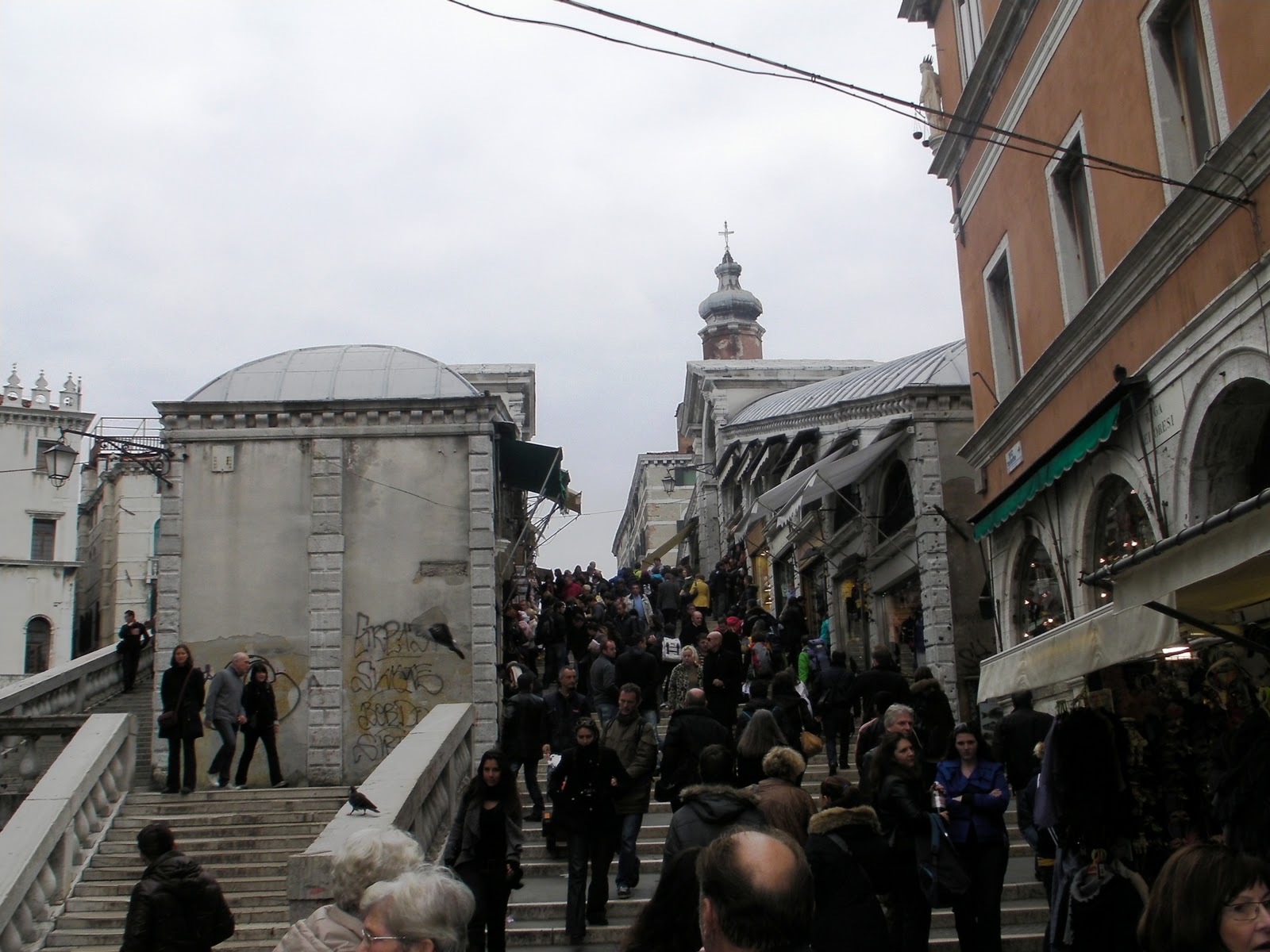
I also transversed across the celebrated Rialto Bridge.


Further inward, I found myself approaching the most famous area in all of Venice, Piazza San Marco.


This landmark site has seen some of the most influential people in history, with even Napoleon claiming it as the, "drawing room of Europe."

Right in the middle is the soaring St.Mark's Campanile.


The original collapsed in the 1902, with a replica built soon after. With the construction of the new bell-tower, they installed an elevator, allowing visitors to ascend to the very heights of the towering Campanile.

It was something I couldn't pass up.

The view from atop was a roaring sight, full of Venetian wonder.


You could view the tiny canals puzzle their way through the narrow houses, with monumental sights making a colossal mark on the city's grand vista.

After experiencing Venice from its highest point, I returned to 'peasant level' and ventured into the unmissable St.Mark Basilica.


This glorious basilica houses the remains of Saint Mark, smuggled out of Alexandria in 828. Yes, a very long time ago.

These frescoes tell the epic story in illustrative form.


Due to Venice's complex relationship with the Byzantine Empire over time, the design of the basilica was heavily influenced by the Byzantine architecture.


As you step into the interior, the entire atmosphere is quite unique to any church generally found in Italy. Much gold is sprinkled throughout the church, with dim lighting being the only source of light. Much of the mosaics and paintings on display are also heavily inspired by Byzantine art.

On the second floor, four bronze horses stand astutely in the corner.


These four statues have been on quite a journey.

These horses were taken from Constantinople, after the Venetians sacked the city in 1204. They were placed atop the basilica for many years, until Napoleon arrived in Venice during 1797. Upon seeing the colossal statues he ordered them removed and sent to Paris, where he put them on grand display. It was returned to Venetians in 1815, in which they were immediately placed it inside, away from liable damage or mistreatment.

Pretty cool...

I stepped forth onto the balcony and observed the sights.


The two pillars, one representing the Lion of Venice, was the site where criminals would be put to death. The space in the middle was where the criminals would be beheaded or hanged while taking in the view of the tranquil sea one last time before death. It was also a signaling point for travelers that they had arrived to Venetian shores.

With day-light saving's now robbing me of a full hour of light, I had to end my first day in Lagoon city.


After experiencing the iconic sights of the Venetian landscape, tomorrow would entail traveling to the far less popular, but just as fascinating locales.
 
Venice, till tomorrow, I bid thee adieu...

Thursday, December 23, 2010

The Eternal City

Today was going to consist of exploring the deep Eternal City.


Bright and early, we headed to our first sight, The Fountain of Four Rivers.


Located in Piazza Navona and designed by Bernini, The Fountain of the Four Rivers represents the four major rivers of the known world. The rivers represented are the Nile, Ganges, Danube, and Plate.


The personification of the rivers into Water Gods is incredibly fantastical. 


Located behind the Fountain of the Four Rivers, is the Sant'Agnese in Agone. This grand church was designed by Bernini's rival, Borromini. And today, both of their works stand side-by-side.

I ventured into the church and found it to incredibly well-defined.


After Piazza Navona, we ventured forth to the timeless, Pantheon.


Under construction, if you didn't notice... 

Originally designed for sacrifices to Pagan Gods, the Pantheon was converted into a Church after Christianity took center stage.


At one point, it was said that the entire exterior of the Pantheon was coated in Bronze. Imagine how that would have looked!


Although much construction was taking place on the exterior, it didn't stop the colossal structure from making a striking impression. 


When I entered into the interior, the jaw-dropping design of the dome utterly dwarfed me.


Its complex precision and ambitious design is so encompassing. 


The Pantheon ranks as one of the finest monuments I've ever seen. It represents a fascinating period in Roman History and is indescribable upon experiencing it firsthand.

Oh, and a key mission in Assassin's Creed: Brotherhood takes place in the classical structure. Which, let's face it, is the most important reason for visiting The Pantheon.

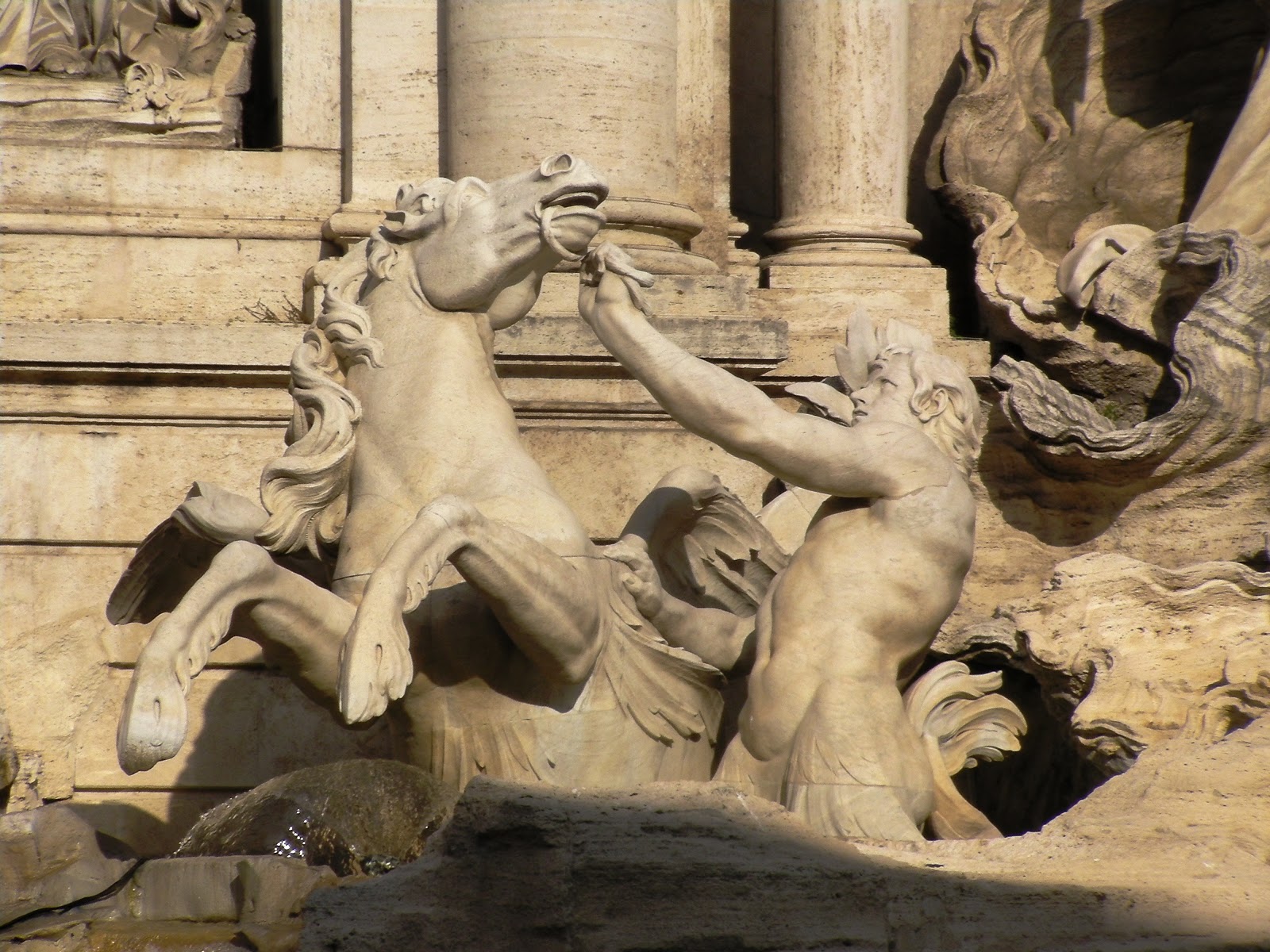
We continued our exploration further into the deep city, and soon found ourselves in front of one the most famous monuments in all of Italy, The Trevi Fountain.


The grand scale of the Trevi Fountain is awe-inspiring. 

You have Neptune mightily striding forward with numerous nymphs, leviathans, and sea-creatures surrounding his encompassing chariot.


I appreciate the fact that fountain doesn't hold back its scope. It's a vast fountain that pulsates with awesome atmosphere, sheer scale, and captures the Sea God perfectly.


The opening of the 2010 video game, God of War III has you battling against Leviathans and the legendary Poseidon in a spectacular first act. Experiencing the Trevi Fountain brought such visceral moments from the epic video game to life.


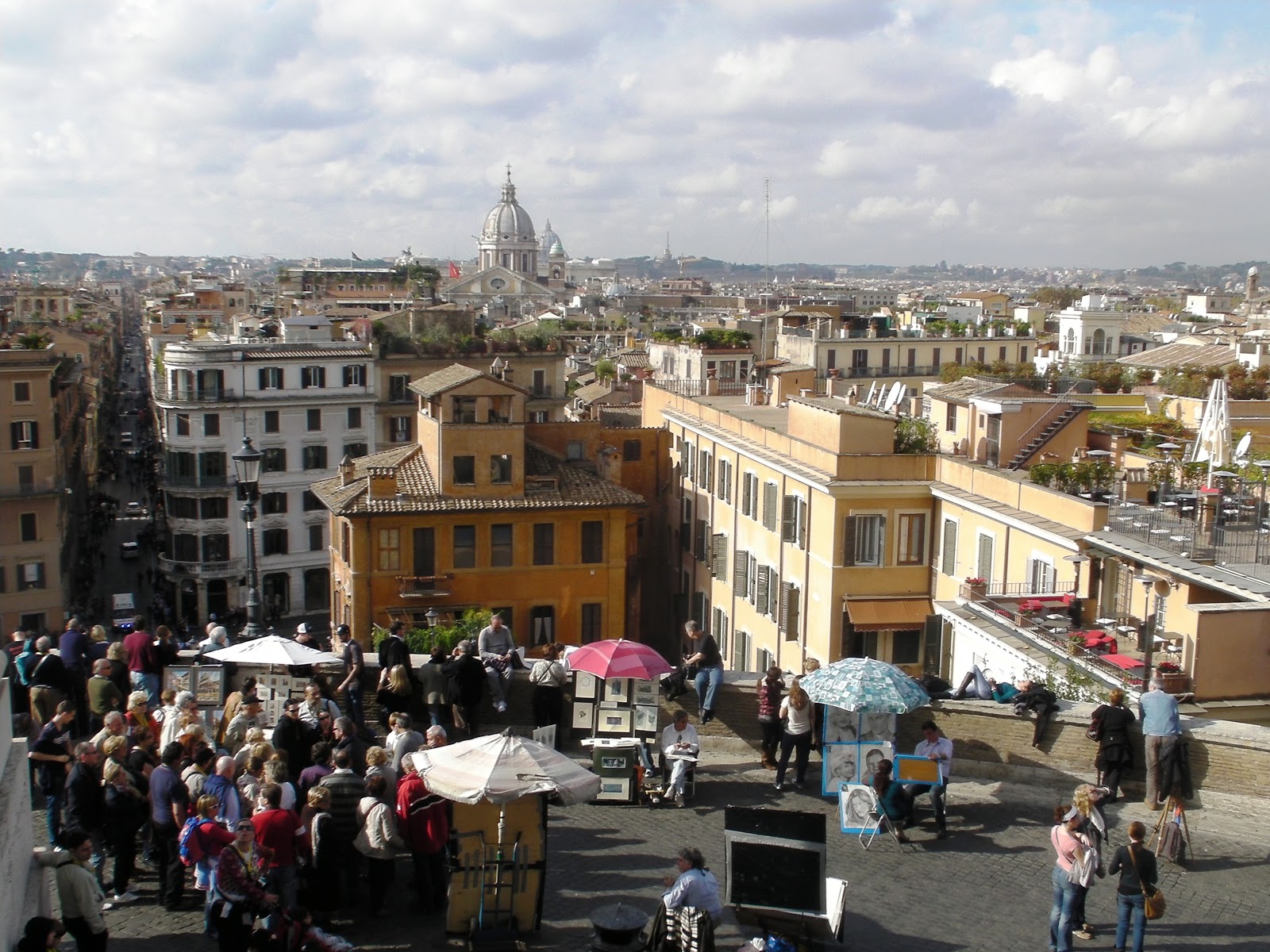
Keeping up the steady pace, we continued towards the Spanish Steps.


Famous for its supposedly creative design, The Spanish Steps is named in honor of the Spanish Embassy, located just across from the Steps.


I would have to say that the Spanish Steps were the most disappointing aspect of the entire venture. I mean it was just steps and more steps.


While the design is unique, it's nothing spectacular and definitely not world-class.


The view from atop was enjoyable, though.


After descending the steps, we began our trek towards our last major monument.

Walking through the narrow streets, some recognizable names surfaced.


We finally reached the TOWERING Vittorio Emanuele monument.


Famous for unifying Italy during the 1800s, Vittorio Emanuele II is a key figure in the development of the Italy we know today. This monument represents his achievements, affects, and resounding impact on modern Italy.


At the base of Emanuele's statue, female figures are sculpted into the marble. Each woman represents a certain Italian city. They hold a certain object relevant to the chosen city. For example, the lady representing Florence holds books and a paintbrush, personifying the arts.


Many other dominating statues stood mightily throughout the monument. Each representing a symbolic representation of either War, Freedom, or National Pride.


Two mighty chariots gallantly guarded the highest reaches of the structure:


The view from atop was quite noteworthy:


The walk through Rome was extraordinary. We visited numerous sites, each symbolizing an important part of Rome's endlessly intriguing history. From Ancient Rome to Renaissance Italy, to the Civil War, Rome history is the city.

After enjoying an authentic Roman lunch, we had a few more destinations to travel to before departing.

The first was the Roman Catacombs:


These catacombs were revolutionary for their time. Only the elite class would have the luxury of getting a burial. Yet, as Christianity took dominance in Rome, many Christians wished to be buried alongside the many martyrs of their faith. Soon, whole catacombs were built in order to house the many bodies.


Wandering through the ancient passageways reminded me very much of The Mummy. I felt any second Brenden Fraser would come, blasting his way through hordes of nefarious mummified Egyptians. Unfortunately, it never happened. :(


While our path was firmly set, they were many turns, bends, and endless paths that you could lose yourselves in. I don't even want to think about what would happen if I did stray off the beaten path.

Small niches had been carved out for little children, with whole rooms dedicated to families. I picked up an ancient stone along the way. Wait a second, I can't even remember where I put it now and it's not like I can exactly distinguish if I was to see it again. Oh well...

After getting my Indiana Jones on, we resurfaced to ground level and entered back into reality.

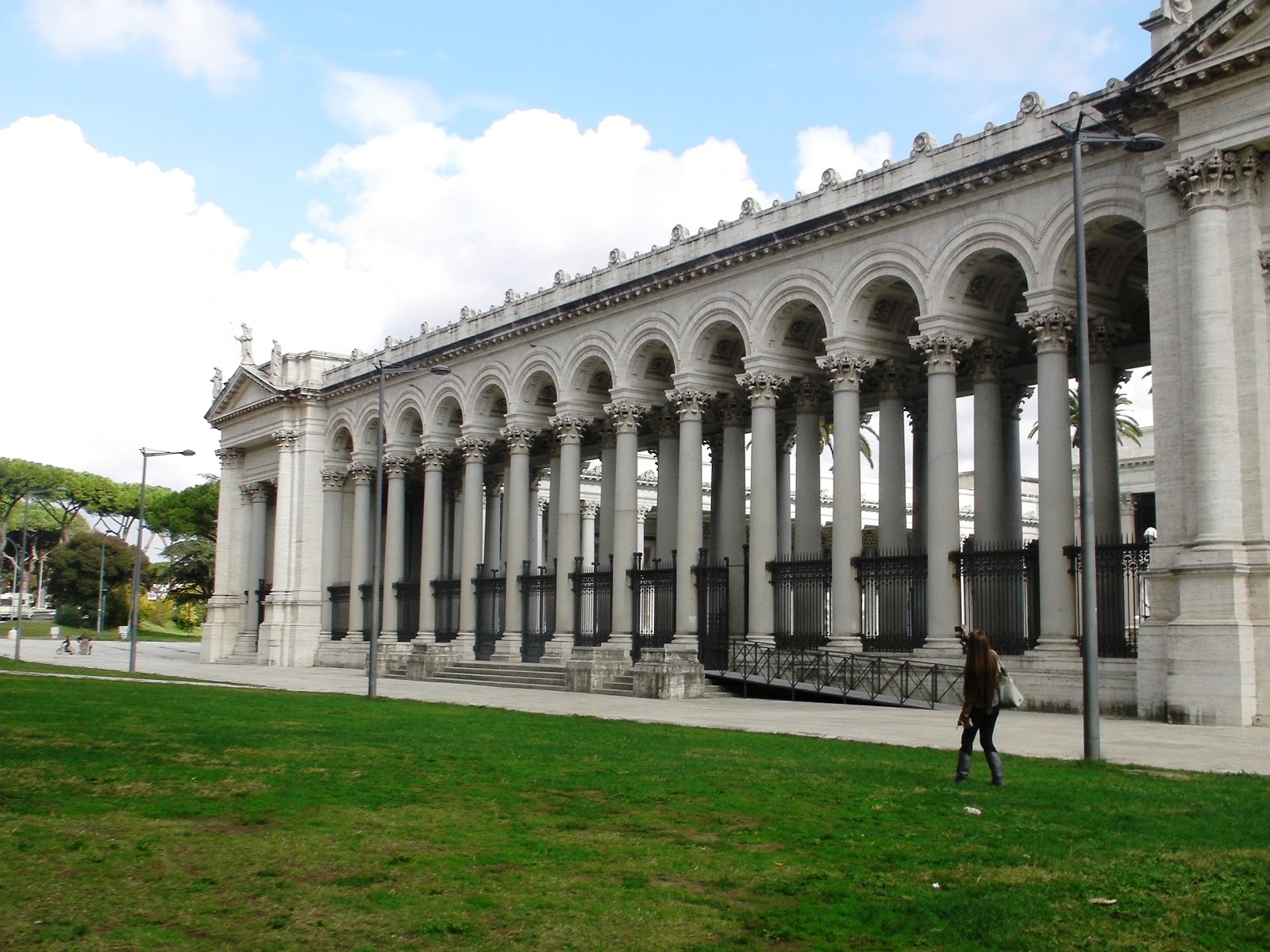
Our final visit was traveling to the second most important church in Rome, Saint Paul's Basilica.

This scared sight is the burial ground for Saint Paul.


The vast and open spaces throughout the church were quite surprising. Many churches decorate the interior was endless amounts of artifacts, symbols, or paintings. But with Saint Paul's Basilica, everything seemed a little more natural, especially with the pleasant garden in front of the Basilica.

The interior was quite expansive:


The actual burial site:


After fully observing the surroundings, the time had arrived to board the bus once more. This time to return to Florence.

Rome is vast and encompassing city. It is the embodiment of everything exquisite about Italy. Revolutionary art, colossal monuments, enthralling history, all wrapped in the Italian experience.